
What is UAS Traffic Management (UTM) – and Why Does it Matter?
As drones become a larger part of our daily lives by delivering packages, inspecting infrastructure, and supporting emergency response, the skies are...
5 min read
Amazon Prime Air, Walmart/Wing, Zipline, and other major retailers are rapidly expanding drone delivery across the United States. In just the past year, the industry has reached an inflection point: Walmart and Wing announced plans to expand to 150 new stores, bringing drone delivery to over 40 million Americans by 2027. Zipline, which recently raised $600M and has completed more than 2 million deliveries globally—more than all other drone delivery providers combined—is planning major U.S. expansion in 2026. Amazon Prime Air continues to expand operations in markets like Metro Detroit and Kansas City, with additional launches planned nationwide.
For consumers, this means unprecedented convenience: packages arriving in minutes instead of days. For cities, it represents a once-in-a-generation opportunity to support innovation while maintaining essential public services.
But there's a critical piece of infrastructure that most communities don't yet have in place—and without it, he arrival of commercial drone delivery at this scale could inadvertently ground the very services cities depend on most.
Here's a scenario playing out in communities across America right now:
A sheriff's department operates a sophisticated Drone as First Responder (DFR) program. When a 911 call comes in, their drones launch immediately—providing eyes on the scene before officers arrive, locating missing persons, and supporting emergency operations that save lives.
Then multiple major retailers announce drone delivery services in that same community. Suddenly, the low-altitude airspace that was relatively quiet is now shared with dozens or hundreds of commercial delivery flights per day. In Dallas-Fort Worth, where both Walmart and Zipline operate, the top 25% of customers are already ordering drone delivery three times per week. In Metro Atlanta, delivery volume has grown 3x in just six months.
Without a coordination system, who has priority? How do emergency drones and delivery drones avoid each other? Who manages the invisible highways in the sky?
The answer isn't obvious—and that's the problem.
The FAA's proposed Part 108 rulemaking for Beyond Visual Line of Sight (BVLOS) operations includes a critical requirement that many municipalities haven't focused on yet: most BVLOS flights must be planned without conflict.
This isn't just a technical checkbox. It's a fundamental shift in how low-altitude airspace operates.
Consider what "strategic deconfliction" actually means when Wing and Walmart are establishing 270+drone delivery locations coast-to-coast from Los Angeles to Miami, and Zipline is expanding operations to Houston, Phoenix, and beyond:
Manual coordination simply doesn't scale. When a city has 5 drone operations per day, phone calls and emails work.When that number becomes 500—which is already happening in some markets—the system breaks down.
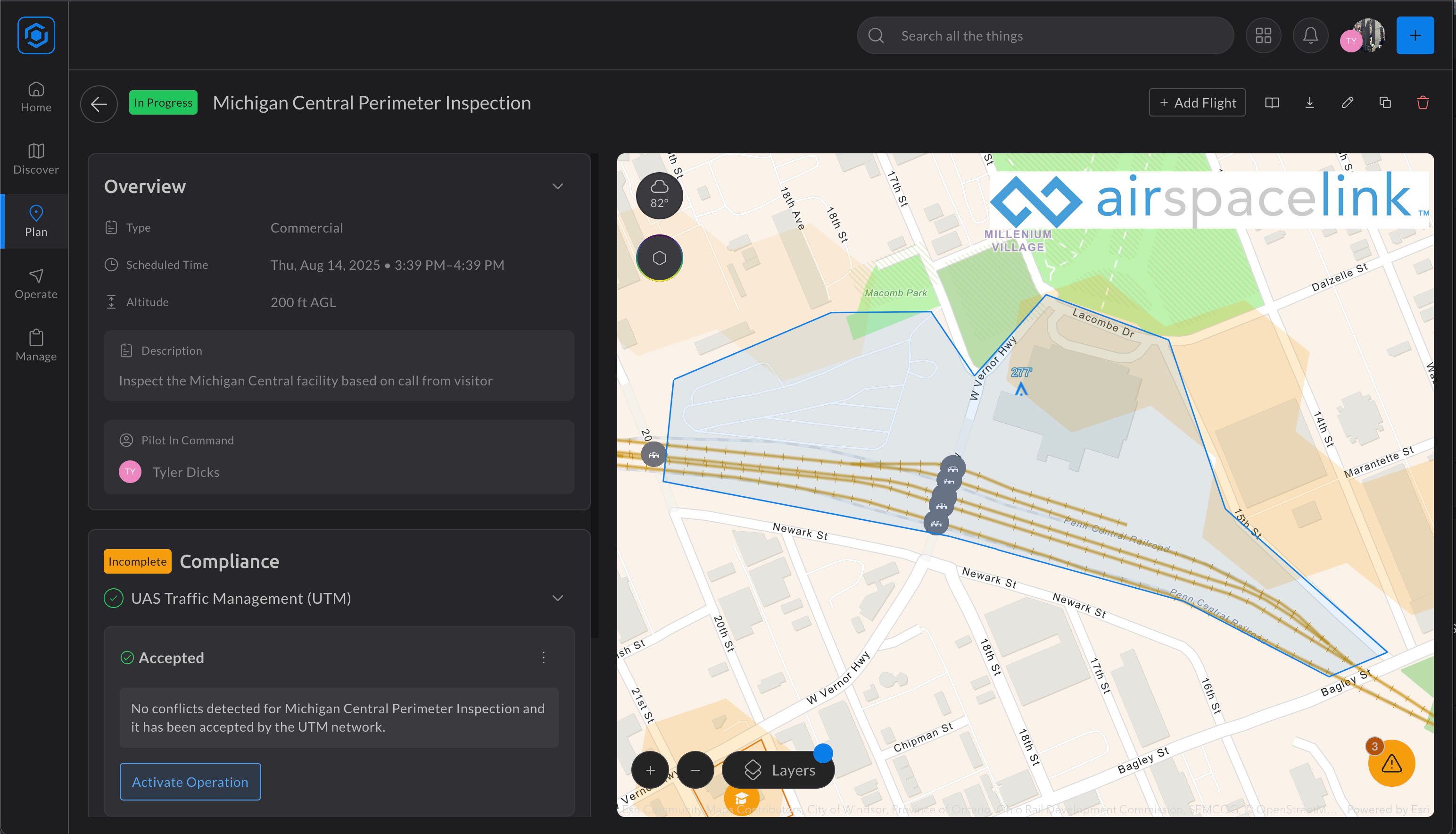
UTM interface in AirHub Portal
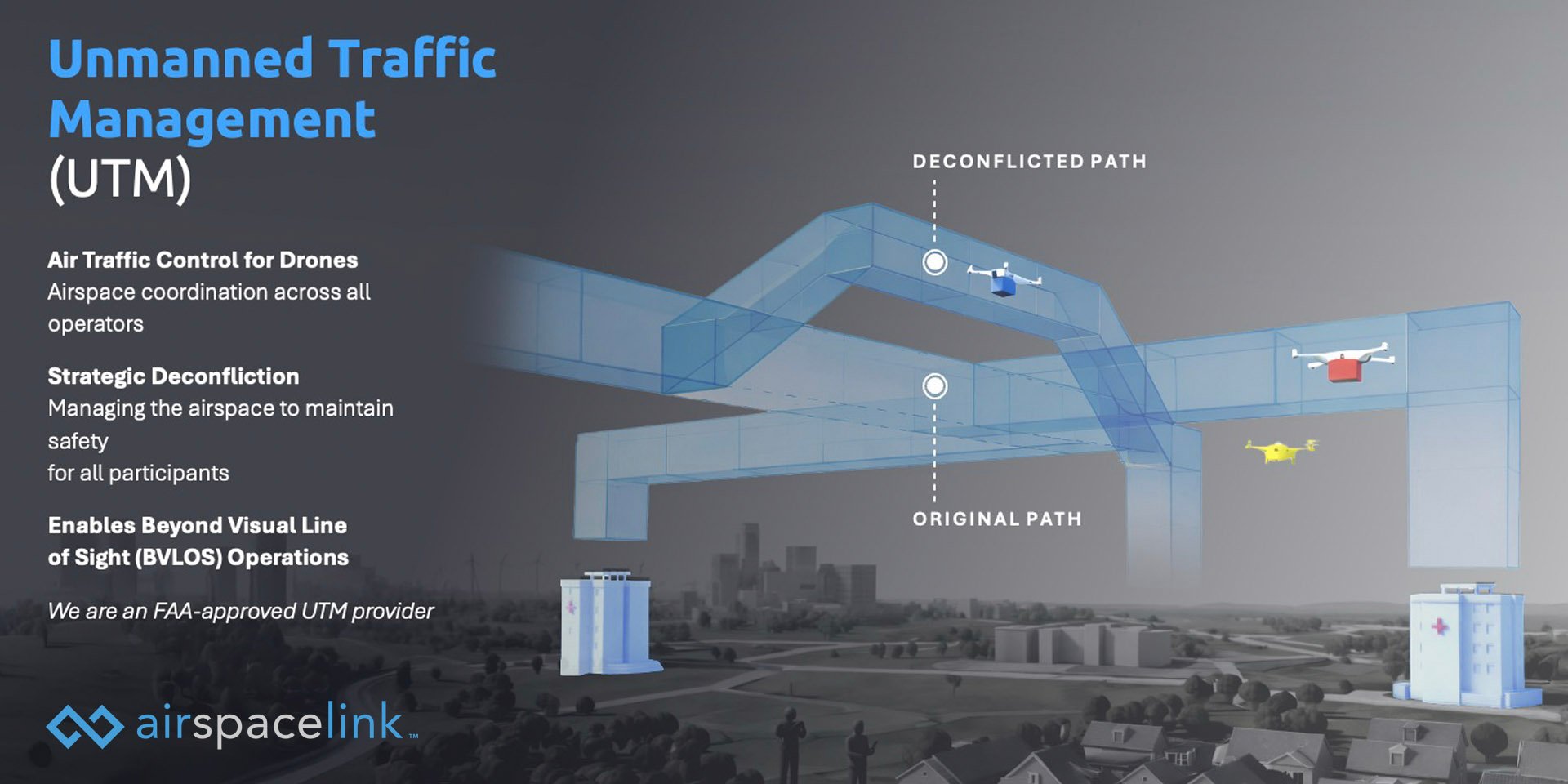
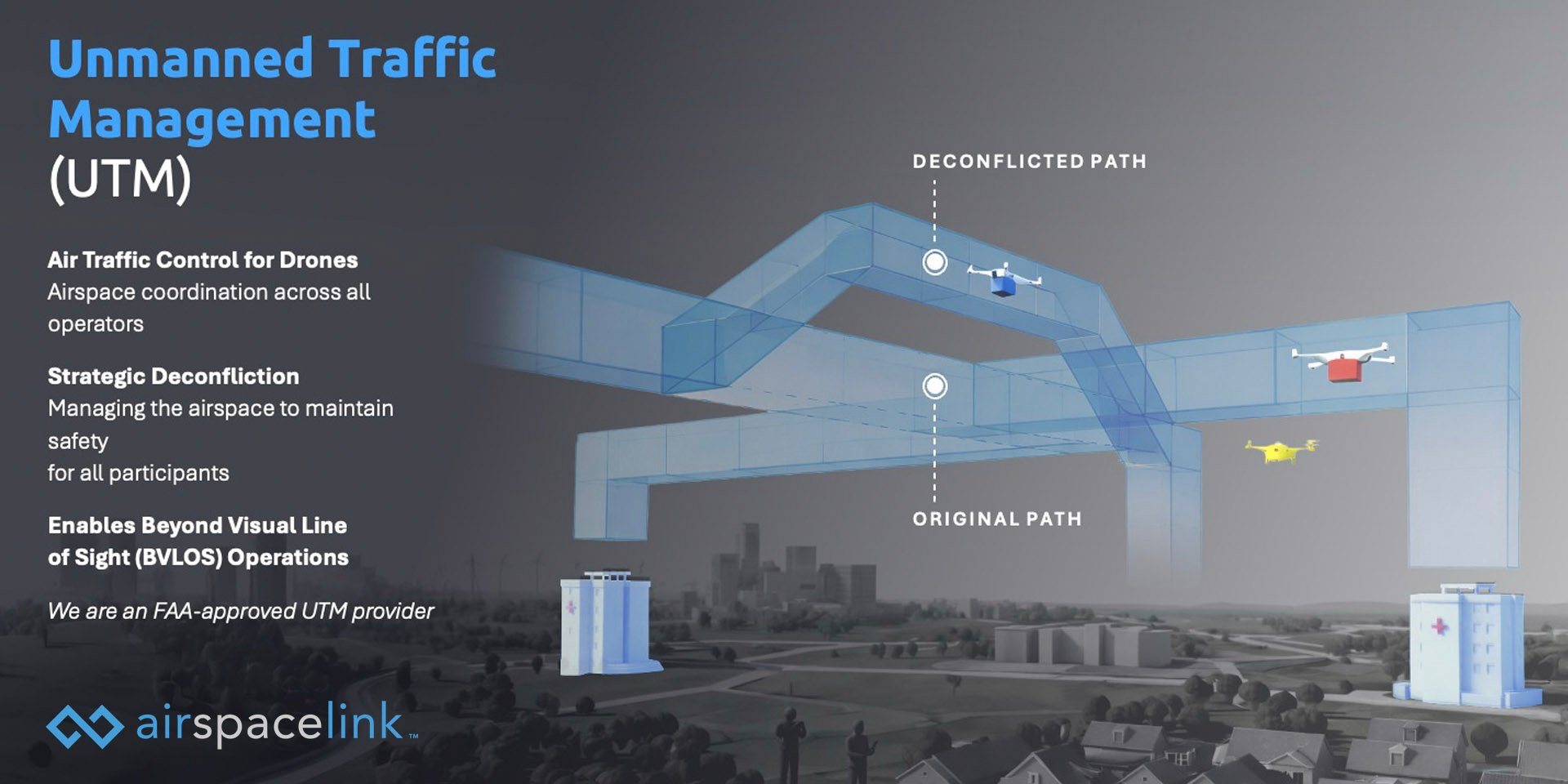
Unmanned Aircraft System TrafficManagement (UTM) is the air traffic control system for drones—but it's fundamentally different from how manned aviation works.
Rather than relying on human air traffic controllers, UTM is a distributed digital system where operators collaboratively share flight plans, receive dynamic airspace information, and automatically deconflict their operations. Think of it as creating invisible highways in the sky that ensure drones have a clear path to their missions. (Read more about UTM in our previous post, What is UTM – and Why Does it Matter?)
Key capabilities include:
Without UTM, airspace becomes a "first-come, first-served" free-for-all. With it, cities can ensure that commercial innovation and public safety both thrive.
UTM systems do more than manage safety and traffic flow—they also create the framework for fair and equitable airspace access.
Without a centralized coordination system, airspace access could default to whoever has the most resources or the loudest voice. When national retailers are establishing networks of hundreds of delivery locations simultaneously, large commercial operators could inadvertently monopolize routes simply because they have the scale to establish patterns first.
A properly designed UTM system prevents this by:
A well-designed UTM system balances operational efficiency with equitable access—ensuring that the airspace serves the entire community, not just the biggest players.
The consequences of operating without UTM aren't theoretical. Consider these scenarios:
Scenario 1: Emergency Response Delays
A child is reported missing in a residential area. The sheriff's departmentlaunches a search drone—but the UTM-less airspace is already occupied by delivery drones on pre-programmed routes serving hundreds of customers daily.Without automated deconfliction, the search is delayed while operators manuallycoordinate via phone calls.
Scenario 2: Service Degradation
A delivery company establishes routes throughout a city. Months later, the fire department wants to implement a DFR program but discovers that the most direct paths to key areas are now congested with commercial traffic flying dozens of routes simultaneously. Without UTM priority protocols, their response times suffer.
Scenario 3: Innovation Stalled
A local startup wants to offer drone-based infrastructure inspection servicesbut can't get reliable airspace access because there's no transparent system for coordinating with existing operations. The lack of infrastructure limits economic development.
This isn't about restricting innovation—it's about enabling it sustainably.
If drone delivery is coming to yourcommunity (or is already there), here are the steps to take:
1. Assess Your Current and Planned Operations
What drone programs does your city currently operate (public safety, inspections, emergency management)?
What programs are you planning to implement in the next 1-2 years?
What commercial drone operations are active or planned in your area?
2. Understand Your UTM Options
Not all UTM providers are equal.Airspace Link's UTM service has been approved by the FAA for use and we'd liketo talk to you about how we can support your municipal drone operations. At minimum though, city leaders should look for systems that are:
3. Engage with Commercial Operators Early
If major retailers are planning drone delivery in your area, start the conversation now. Ask:
4. Budget for Airspace Infrastructure
Just as cities budget for traffic management systems on the ground, low-altitude airspace infrastructure needs to be part of municipal planning. The cost of implementing UTM is minimal compared to the cost of degraded emergency services or missed economic opportunities.
The drone revolution isn't coming—it's here. With over 270 drone delivery locations planned by 2027, reaching more than 40 million Americans, and delivery volumes tripling in established markets, the question isn't whether cities will have extensive drone operations in their airspace; it's whether they'll have the infrastructure to manage those operations safely, fairly, and effectively.
Cities that implement UTM proactively will be positioned to:
Cities that wait will find themselves playing catch-up, potentially compromising emergency services while trying to retrofit coordination systems into an already-congested airspace.
The future of urban airspace is beingwritten right now. Cities that act decisively will write that future on their own terms.
Airspace Link provides the leading UTM solution for state and local municipalities, commercial entities, and federal/military organizations. As an FAA-approved UTM provider and supplier ofLAANC airspace authorization and B4UFLY safety checks, we deliver the essential services that enable safe, scalable drone operations. Our system serves as the air traffic control infrastructure and drone operations management system fort he drone age—ensuring that emergency services, commercial innovation, and community operations can all thrive in shared airspace.
Ready to prepare your community for the future of drone operations? Contact us to learn how our UTM solution can ensure your city maintains priority access for essential services while supporting commercial innovation.

As drones become a larger part of our daily lives by delivering packages, inspecting infrastructure, and supporting emergency response, the skies are...
1 min read
 Michael Healander : Jan 19, 2026, 9:10:32 PM
A Transformational Supercycle for Drones: Carpe Diem (Seize the Day) As we begin the New Year, I want to pause to reflect on a record-setting 2025...
Earlier this month, President Trump signed two executive orders that will fundamentally transform the skies above all American cities. Under these...